Exploring the Cultural and Fashion Dimensions of the Black Scarf Hijab
Intro
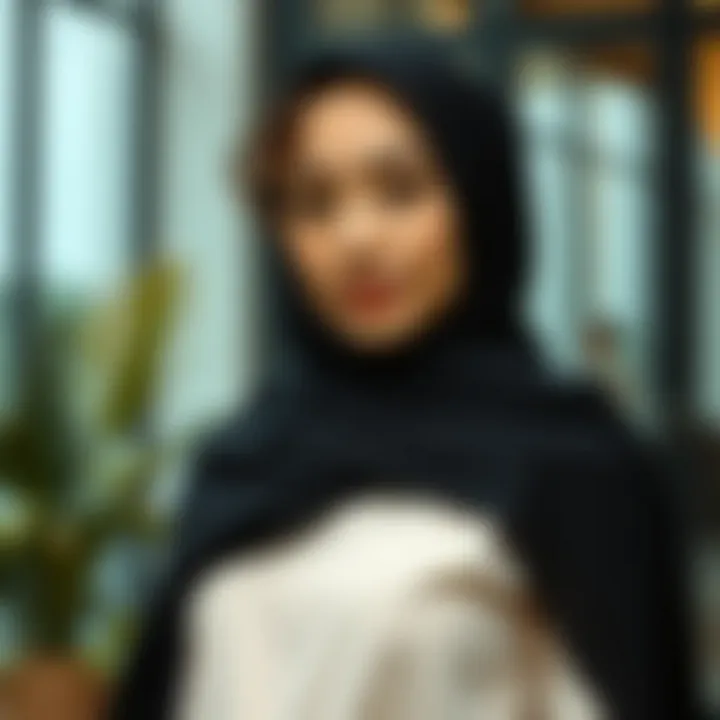
The black scarf hijab is more than just a piece of fabric; it serves as a powerful symbol within various cultural contexts. This fashion item has transcended mere style, evolving into a visual representation of identity, belief, and personal expression. The way in which it is styled, the materials chosen, and how it is presented can say volumes about the wearer and their individual narrative. Through this article, we delve into the historical roots, contemporary trends, and the significance of the black scarf hijab, offering a nuanced understanding of its role in modern fashion and culture.
Current Trends in Fashion
In recent years, the fashion industry has witnessed a notable surge in the popularity of hijabs, particularly black scarves, owing to a broader acceptance and appreciation for cultural diversity in style. Designers and fashion influencers have taken notice, injecting fresh ideas into how the hijab is perceived. It has become a canvas for creative expression and an essential accessory that complements myriad outfits.
Key Styles of the Season
As fashion evolves, so do the styles associated with the black scarf hijab. Current trends highlight:
- Layering Techniques: Many stylists recommend pairing a classic black scarf with varying textures and lengths, creating depth in outfits. This approach adds a modern touch and showcases individual creativity.
- Athleisure Influence: With the rise of athleisure wear, the black hijab is often styled with sportswear, providing both comfort and style. This combination works well for active lifestyles while keeping cultural norms in mind.
- Monochromatic Looks: Black is a versatile color that can be seamlessly integrated into monochromatic outfits. This trend emphasizes simplicity and elegance, allowing the hijab to stand out as a focal point.
Fashion-forward settings often see hijabs styled with bold jewelry or eye-catching accessories, making them both bold and sophisticated. In essence, the black scarf hijab has embraced an eclectic approach, appealing to a diverse demographic.
Influential Designers and Their Impact
Several designers have played pivotal roles in elevating the hijab's status in fashion. One notable figure is Dina Tokio, who has merged traditional hijab styles with contemporary fashion, encouraging women to experiment with looks that make a statement.
Another influential name is Amina Muaddi, whose designs often showcase vibrant colors and intricate patterns. Her work celebrates the hijab while pushing the envelope on what it means to wear one in today’s society.
"Fashion is about more than just clothing; it's about identity and expression. The black hijab is a part of that dialogue." – Dina Tokio
Such designers not only bring visibility to the hijab in the fashion world but also tackle misconceptions, empowering wearers through their collections.
Practical Fashion Advice
The black scarf hijab has carved out a niche in the fashion world. However, knowing how to style it appropriately requires informed choices regarding materials and coordination with other wardrobe pieces.
Guidelines for Choosing the Right Fabrics
Selecting the right fabric is crucial for comfort and style. Here are some pointers:
- Cotton: Lightweight, breathable, and great for everyday wear. Perfect for warmer climates.
- Chiffon: Flows beautifully, providing elegance and a subtle sheen. Excellent for formal occasions.
- Jersey: Stretchy and soft, making it ideal for casual wear while maintaining a trendy vibe.
Understanding the attributes of various materials can greatly enhance both comfort and aesthetic appeal.
Tips for Building a Versatile Wardrobe
To get the best out of the black scarf hijab, building a versatile wardrobe is essential. Consider the following:
- Neutral Base: Basics in black, white, or beige serve as great foundations, allowing the scarf to take center stage.
- Layering Pieces: Jackets and cardigans make it easier to mix and match during different seasons.
- Accessory Balance: Experiment with belts, bags, and shoes to balance the outfit without overwhelming the hijab's simplicity.
Combining these styles and tips enables wearers to explore the depth that the black scarf hijab offers in personal style.
For more insights on cultural representations in fashion, check resources such as Wikipedia and Britannica. Additionally, platforms like Reddit offer community-driven discussions on fashionable hijab styles and trends.
Prolusion to the Black Scarf Hijab
The black scarf hijab represents more than just a piece of fabric. It encapsulates cultural identity, personal expression, and a connection to a long-standing tradition. Numerous women around the world choose the hijab not solely for religious reasons but also to assert their individuality and style. As fashion evolves, so does the hijab, making it vital to understand its nuances and significance.
When delving into the topic of the black scarf hijab, one finds a rich tapestry woven with layers of history, cultural significance, and contemporary relevance. This exploration isn’t merely an analysis of fabric choices or styling tips; it’s about illuminating the profound journey of this accessory and the lives it touches.
Defining the Black Scarf Hijab
At its core, the black scarf hijab serves as a headscarf for many women, particularly in Muslim communities. It is predominantly worn to maintain modesty, yet its interpretations can vary widely.
While traditionally black, the hijab comes in myriad designs, fabrics, and styles, allowing for personalization. Think of it as an artistic canvas, where the wearer can express their heritage, beliefs, and personal style. Importantly, the black hue often symbolizes elegance and simplicity, grounding it as a staple piece in many wardrobes.
Over time, the term "hijab" has transcended its literal meaning, now encapsulating various styles including the dupatta in South Asia —a colorful scarf that often accompanies traditional attire— and the shayla popular among Gulf women. Thus, the black scarf hijab, while simple, holds complexity in its definition and usage.
Cultural Significance
The black scarf hijab acts as a cultural artifact, representing the intersection of faith and fashion. Worn throughout centuries, it has garnered myriad meanings shaped by varying social, political, and cultural landscapes.
"The hijab is more than an article of clothing; it is a powerful statement of identity and belief."
In many cultures, wearing the hijab is a profound expression of cultural pride and resilience. It can symbolize women's empowerment—an assertion of autonomy in a world where their choices are frequently scrutinized. Moreover, for some, participating in hijab fashion serves as a way to spark dialogue about femininity, empowerment, and diversity.
The black scarf hijab is not without its controversies. In many Western societies, it has become a subject of debate, often viewed through a lens of misunderstanding. However, it remains an emblem of strength and identity for countless women worldwide. Understanding its cultural significance elevates the conversation and encourages an appreciation for the stories encased in each fold of fabric.


Historical Context
Understanding the historical context of the black scarf hijab is crucial for grasping its journey from a simple piece of fabric to a complex symbol intertwining culture, tradition, and identity. The hijab's evolution over time is marked by various influences, adaptations, and regional characteristics that shape its significance today. By exploring its past, we become more aware of how these elements influence contemporary interpretations and practices surrounding the hijab, making the discussion about it all the richer and more profound.
The Evolution of the Hijab
The hijab, often recognized for its spiritual and cultural resonance, has its roots embedded deeply in human history. Initially, its purpose was to provide modesty and a sense of privacy in public spaces. The significance of the hijab transcends mere fashion; it mirrors societal values and religious teachings from which it arises. From ancient civilizations, the use of head coverings symbolized dignity and respect. As we move forward through the ages, different societies have put their unique spin on what a hijab signifies. What started as a practical garment in some cultures has transitioned into a complex symbol associated with empowerment, resistance, and identity.
Regional Variations
In examining the regional variations of the hijab, we see how diverse cultural practices give rise to distinct styles and meanings. Each region carries its own traditions that contribute greatly to the hijab's rich historical tapestry.
Middle Eastern Traditions
Middle Eastern traditions are often seen as the cornerstone of hijab-wearing practices. Countries like Saudi Arabia, Iran, and Iraq have specific mandates and cultural expectations regarding modesty. The key characteristic of Middle Eastern hijabs lies in their strict adherence to conservative values, making them a fundamental aspect of cultural identity. The unique feature of these traditions is the various styles of hijab, such as the abaya and chador, which offer a powerful statement of femininity while also preserving modesty. Though viewed by some as restrictive, for many women in these regions, it's a beneficial choice that provides a sense of belonging and community amidst a rapidly changing world.
South Asian Influences
Turning to South Asia, the influences on hijab practices reveal a blend of cultural practices ranging from traditional to modern interpretations. Countries like Pakistan and India showcase a rich diversity in styles that reflect regional and familial heritages. A key characteristic of South Asian hijabs is their vibrant colors and intricate embellishments, which speak volumes about personal identity. The unique feature of this regional influence lies in its adaptability; women can modify styles to fit different occasions, thus allowing for self-expression. However, it also faces challenges regarding social acceptance and evolving perceptions of modesty, making this perspective a narrative worth exploring.
Western Adaptations
In Western contexts, adaptations of the hijab have emerged as reflections of globalization and cultural exchange. As communities grow and evolve, so do the interpretations of the hijab. The key characteristic of Western adaptations is their focus on personal choice and individual empowerment. Women often wear hijabs in unique styles that incorporate modern trends, merging tradition with contemporary fashion. The unique feature of this approach is the emphasis on free choice—acting as a form of defiance against stereotypes and fostering empowerment among wearers. Nonetheless, these adaptations can sometimes be met with skepticism, as understanding can vary widely depending on cultural contexts. Embracing these nuances generates enrichment for the ongoing global dialogue about the hijab’s significance.
Understanding these regional variations broadens the conversation about the hijab, making it clear that it is not simply a garment but a lived experience filled with deep meanings and reflections of personal and communal identities.
The exploration of historical context alongside its regional variations sets the stage for a more comprehensive understanding of the black scarf hijab, revealing both its aesthetic and cultural dimensions.
Design and Fabric Considerations
Design and fabric considerations are paramount when discussing the black scarf hijab. Choosing the right material and style can greatly influence not only the aesthetics but also how comfortable and practical the hijab will be for everyday wear. Different fabrics can affect the way the hijab drapes on the wearer, its overall breathability, and how well it holds up through the seasons.
In this section, we will explore various fabric options and styles, emphasizing their unique contributions to both the black scarf hijab’s cultural significance and its evolving presence in contemporary fashion.
Choosing the Right Material
Cotton
Cotton hijabs are famed for their practicality and comfort. One of the biggest selling points is the breathability it provides, especially in warmer climates or during those sweltering summer months. The lightweight nature of cotton makes it a go-to choice for everyday wear, allowing for ease of movement and comfort.
"Cotton is the fabric of choice for simplicity, offering comfort without sacrificing style."
A distinctive feature of cotton is its ability to absorb moisture, which can be beneficial in keeping the wearer feeling fresh. However, it might not be ideal for those who prefer a more structured look, as cotton can wrinkle easily and may require a bit of styling to maintain a polished appearance.
Silk
Silk hijabs, on the other hand, bring a level of elegance that is hard to beat. With a luxurious feel, silk adds a touch of sophistication to any outfit. The smooth texture not only drapes beautifully but also tends to hold its shape well, making it suitable for formal occasions.
A unique characteristic of silk is its natural sheen, which can elevate the overall aesthetic of the hijab. While it provides a high-fashion look, silk is typically less breathable than cotton and may not be optimal in hot weather. Care should also be taken, as silk can easily be damaged if not handled properly.
Polyester
Polyester is becoming increasingly popular among hijab wearers for its durability and versatility. The fabric offers a synthetic option that can withstand the test of time. One of its key benefits is that it is less prone to wrinkling, making it ideal for those who lead busy lives and may not have time for constant upkeep.
The unique feature of polyester is its adaptability; it can be blended with other materials to create mixes that balance breathability and structure. However, polyester may not be as breathable as cotton, potentially leading to discomfort in warm conditions.
Styles and Cuts
Classic Draping
Classic draping is a timeless style that highlights the elegant flow of fabric. This method involves letting the hijab fall gracefully, framing the face and creating an effortless yet refined look. The beauty of classic draping lies in its versatility, making it suitable for various occasions, from casual outings to formal gatherings.
The key characteristic of this style is its simplicity, which allows the black scarf hijab to be worn without much fuss, appealing to those who appreciate a minimalist aesthetic. While it can be styled in different ways, the downside is that it may not provide as much coverage as other styles, depending on the wearer’s preference.
Contemporary Styles
Contemporary styles can be seen as a modern twist on traditional hijab looks. These designs bring innovation and creativity, incorporating elements such as asymmetrical cuts, bold prints, and unique fastenings. This approach allows for personal expression, making it appealing to a younger generation.
The standout feature of contemporary styles is their ability to combine fashion with individuality. This makes them popular among those eager to push the boundaries of traditional norms. However, as styles evolve quickly, some may find it challenging to keep up with trends that may come and go.
Layering Techniques
Layering techniques provide a unique and stylish way to wear the black scarf hijab. This approach involves combining different fabrics, textures, and styles to create depth in the outfit. Layering not only allows for personalization but also plays a crucial role in transitioning between seasons.
A key benefit of layering is the adaptability it offers; it allows the wearer to adjust their look based on the weather or occasion. However, one must be cautious about weight and bulk, as over-layering can lead to discomfort and a less streamlined appearance.
Styling the Black Scarf Hijab
Styling the black scarf hijab intertwines both artistry and practical functionality. In the modern world, this element of dress becomes more than just a piece of fabric; it stands as a means of self-expression and cultural representation. For fashion designers, stylists, and retail workers, understanding the nuances of styling hijabs opens avenues to cater to the diverse tastes and needs of wearers. When done well, styling not only enhances the aesthetic appeal but also respects the cultural significance behind the hijab.
Casual Looks
Casual styling of the black scarf hijab offers a chance to infuse comfort with trendy flair. Think of easy-going lunches or shopping trips where maintaining an effortlessly chic appearance is key. Choosing breathable cotton fabric works wonders, as it allows for airflow while keeping the look relaxed. To create a laid-back vibe, loose drapes and simple knots can emphasize the nonchalant nature of the outfit.
- Key Aspects of Casual Looks
- Comfort Over Complexity: Simple wrap techniques help achieve a casual look without fuss.
- Color Coordination: Pairing the black hijab with vibrant or pastel outfits can create an appealing contrast.
- Accessories: Minimalistic jewelry, like stud earrings, can keep the focus on the hijab without overwhelming.
Formal Attire
When transitioning to formal occasions, the black hijab becomes a canvas for elegance. It can be styled in numerous ways, depending on the outfit’s requirements and the event's decorum. Silk and rich polyester blends are popular choices for their luxurious feel and drape. Pinning the scarf or using a brooch can elevate the overall look, guiding the eye seamlessly from head to toe.
- Characteristics of Formal Looks
- Structured Styles: Consider classics like the turban or structured wrap for a graceful presentation.
- Complementary Pieces: Long, fitted gowns or tailored suits with intricate designs can amplify the black scarf’s sophistication.
- Quality Fabric Choices: Opting for silk or satin gives a sleek and polished appearance, crucial for formal settings.
Seasonal Adaptations
Summer Styles
During the warm summer months, styling for comfort and ease takes the forefront. The lightweight fabric of a chiffon or breathable cotton hijab allows for a fashionable yet soothing experience, especially in sweltering heat. Summer styles can also incorporate playful elements like vibrant patterns or subtle prints. Choosing to wear the hijab loosely, perhaps letting some sections flow freely, enhances air circulation.
- Advantages of Summer Styles
- Breathability: Ensures the wearer remains cool throughout the hot weather.
- Versatility: Easily transition from pool parties to evening outings with the same hijab.
- Light Layers: Can be paired with tank tops or flowy dresses, allowing for chic overlays without too much bulk.
Winter Layers
As temperatures dip, winter layers provide an opportunity to showcase the black scarf hijab in new, innovative ways. Opting for heavier fabrics like wool blends or thicker knits not only boosts warmth but also adds texture and volume. Layering techniques become essential, as they can merge aesthetic appeal with functional warmth.
- Key Characteristics of Winter Layers
- Warmth and Body Coverage: A well-wrapped hijab keeps both the head and neck snug during chilling winds.
- Textures and Patterns: Mixing textures (like pairing knitted scarves with smooth outerwear) can create depth in winter outfits.
- Layering Options: Consider combining non-slip under-scarves to add warmth without compromising style.
Styling the black scarf hijab thus transcends basic wrapping; it evolves with seasons, moods, and occasions. From casual outings to formal galas, and throughout the ever-changing climate, the black scarf hijab stands resilient as a versatile piece of cultural expression.
The Black Scarf Hijab and Identity
The black scarf hijab is not just a piece of fabric; it carries deep layers of meaning and reflection regarding identity. For many, it serves as a canvas for personal expression, marrying tradition with individuality. This section explores how the black scarf hijab influences and shapes identity in various contexts, highlighting its significance in cultural representation and personal empowerment.
Expressions of Femininity
In many cultures, the hijab, especially the black scarf version, has evolved into a powerful symbol of femininity. Rather than being a constraint, it presents an opportunity for women to express their unique style while maintaining their cultural and religious values. The beauty of styling the black scarf lies in how women manipulate fabric and form. They can create looks that accentuate their features, swap textures, and even pair them with contemporary attire, resulting in a balance of tradition and modernity.
For instance, a woman may choose to wrap her black scarf in a simple yet elegant manner when attending a family gathering, showcasing her respect for tradition. However, during social outings, she might opt for a more experimental drape, showcasing her whimsical side. This versatility speaks volumes about the potential of the hijab to express personal identity.
Some women even share their experiences on platforms like Instagram, using hashtags that celebrate hijab fashion. This creates a sense of community where women inspire one another, proving that the black scarf can be a bold statement of femininity. The hijab becomes more than a garment; it transforms into a declaration of strength and individuality.
Political Statements
The black scarf hijab does not just represent personal choice; it also serves as a canvas for political expression. It is a potent symbol in numerous socio-political debates, encapsulating issues of freedom, choice, and identity. Women who wear the black scarf often see it as a form of resistance against societal norms that dictate how they should dress. In many contexts, it represents a stand against the politicization of women’s bodies.
For example, during protests or movements advocating for women's rights, the black scarf becomes a rallying symbol. These situations demonstrate how the hijab can challenge stereotypes and evoke dialogue. The very act of wearing a black scarf in a place where it may be met with curiousty can prompt important conversations about identity, freedom, and cultural understanding.
Moreover, several prominent figures have used their platforms to advocate for the rights of women who choose to wear the hijab, highlighting that wearing a black scarf can simultaneously embrace tradition and challenge the status quo. In this light, the black scarf hijab becomes not merely a garment but a bold political statement reflecting courage and conviction in one’s beliefs.
"The act of wearing a hijab can be both personal and political, symbolizing a woman’s empowerment, individuality, and resistance."
As the discourse around the hijab continues to evolve, it remains a relevant point of contention, embodying the complexities of identity that women navigate in a global society. The black scarf hijab is thus a multifaceted emblem, rich with cultural and individual significance.
Global Perspectives on the Hijab
The hijab, particularly the black scarf variety, is not only a piece of clothing but a global phenomenon that carries a complex web of meanings and interpretations. As we traverse various cultures and societies, it's crucial to understand how the black scarf hijab intersects with local traditions, religious beliefs, and fashion trends. The significance of global perspectives on the hijab unfurls under numerous frameworks—cultural, social, political, and economic—that can either support or challenge a woman's choice to wear it.
Western Interpretations
In the West, perceptions of the hijab are often painted with broad strokes, frequently missing the nuance of individual agency and cultural significance. The black scarf hijab may be seen as a symbol of oppression by some, while others argue it signifies empowerment and personal choice. Many Western designers occasionally adopt hijab motifs in high fashion, elevating its status from mere garment to fashionable statement. This adoption, however, is often met with backlash for appropriation, raising questions about respect, understanding, and representation.
This duality can become particularly evident during events like Fashion Week, where the black scarf is both celebrated and critiqued. Fashionistas may laud designers pushing boundaries, but this appreciation can come with undertones of exoticism. The challenge lies in separating admiration from appropriation, particularly when many designers lack a deep understanding of the cultural roots behind the hijab.
Additionally, the media's portrayal plays a role in shaping perceptions. Reports often focus on contentious issues like laws banning the hijab in certain countries, neglecting positive stories of women wearing it as a mark of pride in their identity. The complexities within the Western interpretation of the black scarf hijab deserve a more profound discourse that includes diverse voices, particularly those of the women who choose to wear it.
Cultural Acceptance and Challenges
Across different societies, the acceptance of the black scarf hijab varies widely, influenced by historical contexts, cultural narratives, and social dynamics. In some regions, wearing a hijab is embraced as a norm and a marker of religious observance; in others, it sparks intense debate. The challenge is particularly vivid in secular contexts where the hijab is perceived as incompatible with modern values.
Despite these challenges, many women wearing the black scarf experience a strong sense of community and support. Here, the hijab serves as a badge of identity, intertwining personal beliefs with collective solidarity. This communal aspect can be essential, especially for immigrants who find strength and brotherhood in shared experiences, often standing together against cultural prejudices.
Moreover, grassroots movements advocating for the acceptance of the hijab are burgeoning. Organizations aim to educate the public about the significance of the hijab, aiming to dismantle stereotypes that surround it. They utilize social media platforms—such as Instagram and Facebook—to promote understanding and explore the nuanced choices women make regarding their attire.
"The hijab isn't just the fabric; it's a fabric of society—interwoven with stories of struggle, resilience, and pride."
Through these efforts, a more nuanced understanding can emerge, showcasing the black scarf hijab as a multifaceted tool for expression rather than merely a subject of contention. Ultimately, recognizing the cultural acceptance and ongoing challenges surrounding the hijab is vital in fostering a global dialogue on women’s rights, identity, and empowerment.
Empowerment and the Black Scarf Hijab
The discussion surrounding the black scarf hijab goes beyond mere fabric or fashion. It's deeply intertwined with themes of empowerment and identity. This section delves into how the black scarf hijab serves as a medium for personal expression and collective solidarity, making it a significant element within the broader context of cultural and social dynamics.
Personal Empowerment
Wearing the black scarf hijab can be a profound assertion of individual identity. For many women, it stands as a deliberate choice that reflects their values, beliefs, and cultural heritage. This choice is not merely a tradition or an obligation; rather, it can symbolize autonomy and confidence.
Adorning a hijab, especially one as striking as the black scarf, can transform how a woman perceives herself. It acts as a shield, providing a layer of protection against societal judgments, allowing the wearer to focus on internal rather than external validation. When a woman proudly embraces the black scarf hijab, she often feels a sense of empowerment that bolsters her self-esteem. In various contexts, this can uplift women, making them feel more in control of their appearance and their narrative.
The psychological impact is substantial. Wearing a hijab can foster a sense of belonging and affirmation of one’s identity in spaces where cultural differences might otherwise create barriers. Whether through personal experiences or shared narratives, many hijab wearers report feeling empowered by the connection to their community and heritage, reinforcing a positive self-image that combats the pressures of conforming to Western beauty standards.
Community and Solidarity
On a broader scale, the black scarf hijab plays a distinctive role in fostering community and solidarity among women. In various cultures, wearing a hijab cultivates a sense of belonging to a larger sisterhood, leading to shared experiences and collective advocacy for rights and representation.
"Wearing a hijab is a testament not only to personal beliefs but also to a commitment to join a global community that values dignity and respect."
The act of donning the black scarf can serve as a silent yet powerful statement against oppression. Women wearing the hijab often find themselves bonded in shared values, promoting mutual support and understanding, especially in multicultural societies. This solidarity becomes particularly palpable during events or movements that focus on women’s rights, where collective presence and unity can alter perceptions and break stereotypes.
Furthermore, the digital age facilitates this sense of community. Women across continents can share their hijab ensembles, styling tips, and personal stories online, inspiring others and drawing strength from each other’s journeys. Social media platforms like Instagram and Pinterest showcase diverse representations of hijab styles, making the black scarf hijab a symbol of not just personal empowerment but group identity and resilience.
Sustainability in Hijab Fashion
Sustainability in the realm of hijab fashion, particularly regarding the black scarf hijab, is more than just a trendy buzzword. It speaks to a crucial shift in consumer behavior that acknowledges the impact of fashion on both the environment and society. As fashion designers, stylists, and retail workers become increasingly aware of these issues, it's essential to understand how sustainability can be integrated into the design and production processes of hijabs.
Eco-Friendly Materials
When it comes to creating a black scarf hijab that is kind to the planet, the choice of materials plays a pivotal role. Eco-friendly fabrics such as organic cotton, Tencel, and bamboo are not just more sustainable options; they also provide comfort and breathability. These materials use fewer chemicals during production and are often biodegradable, reducing the strain on landfills.
- Organic Cotton: Grown without harmful pesticides, organic cotton is not only soft on the skin but also better for the environment. It promotes healthier farming practices, which is a win-win situation.
- Tencel: This innovative fabric originates from sustainable wood sources, typically from eucalyptus trees. It’s processed using a closed-loop system, meaning the solvents are recycled and reused, leading to significantly less waste.
- Bamboo: Known for its rapid growth, bamboo is easily renewable and can grow without the need for pesticides. It’s also naturally anti-bacterial, making it a great option for those who wear hijabs for extended periods.
Making an informed choice about these materials can not only ensure a softer, high-quality black scarf hijab but also contribute towards a more sustainable and eco-conscious fashion landscape.
Ethical Production Practices
Just as the materials are vital, the technology and processes used to create black scarf hijabs are equally important. Ethical production practices can reshape the industry standards, ensuring that all workers involved in the making of hijabs are treated fairly and work in safe conditions.
Some key practices include:
- Fair Trade Certification: Supporting manufacturers that adhere to fair trade principles ensures that workers receive fair wages and work under safe conditions.
- Local Sourcing: By sourcing materials locally, designers can reduce their carbon footprint, promoting community job creation.
- Transparent Supply Chains: Brands that are upfront about their sourcing and production processes are building trust with consumers. Knowing where and how a hijab is made contributes to a conscious purchasing decision for many individuals.
Adopting these practices can empower both designers and consumers to make informed choices that align with their values while contributing to a more ethical and sustainable fashion industry.
"Fashion is a language that tells who you are without having to speak. Let's make it a language that respects our world, too."
By focusing on eco-friendly materials and ethical production practices, the black scarf hijab transcends its role as merely an accessory. It takes on a new identity as a symbol of responsibility in fashion, setting a precedent for future trends in the industry that prioritizes sustainability.
Culmination
The exploration of the black scarf hijab reveals a tapestry woven with threads of culture, identity, and evolving fashion dynamics. The black scarf hijab is not merely an accessory; it serves as a profound statement that embodies the complexities of individual and collective existence. Its role in diverse contexts reinforces the importance of understanding various perspectives that shape the perception of the hijab beyond stereotypes or traditional narratives.
Reflecting on Change
Looking back, the black scarf hijab has undergone significant transformations influenced by social movements, globalization, and shifting cultural norms. From being seen solely as a religious symbol to emerging as a fashion statement that resonates with younger generations, the journey reflects broader societal changes. Women have reclaimed the narrative of the hijab, asserting their agency in how they choose to wear it while battling misconceptions. This change is evident not only in the fashion industry but also in social media, which has become a hotbed for dialogue surrounding the hijab's role as both a traditional garment and a modern accessory. The rise of influencers and designers who embrace the black scarf hijab in their collections signifies a shift towards inclusivity, promoting self-expression and cultural pride.
Future Trends
As the world progresses, the black scarf hijab's influence in the fashion landscape is set to grow even more pronounced. We can expect innovative designs to emerge, blending traditional craftsmanship with contemporary aesthetics. For instance, the integration of sustainable fabrics and ethically produced materials could lead to a more eco-conscious approach to hijab fashion, appealing to the environmentally aware consumer.
Moreover, fashion shows and events are increasingly showcasing hijab-friendly designs, allowing for a wider acceptance within mainstream fashion. As conversations about inclusivity in fashion continue, the black scarf hijab will likely remain at the forefront, inspiring dialogue around representation and diversity. Additionally, technological advancements, like virtual try-ons, could revolutionize how individuals choose and wear their hijabs, enhancing personalization in ways previously unimagined.
The future is bright for the black scarf hijab, highlighting its dual role as a symbol of identity and fashion statement. As styles evolve and conversations deepen, this cherished garment will continue to connect diverse communities, fostering an appreciation for its multifaceted nature.